
107th Edition — August 29, 2026
News from the projects
RNO-G
(submitted by Anna Nelles)
RNO-G just completed this year’s installation season with the last team leaving Greenland on August 20th. Due to large overlap in field personnel with the IceCube Upgrade that sent people home from South Pole only in early 2026, the season started a bit later than usual on June 14th at Summit Station. The team made some major improvements to the drill first which enabled a smooth and successful drilling season, preparing 3 stations worth of holes to be filled with antennas in 2027. The drill now performs even better than expected, having delivered the fastest hole of 100 meters in less than 10 hours. This has been the second drilling season without major interruption, illustrating that RNO-G is maturing towards “production installation”.
Installing the station is always faster than drilling, so unsurprisingly 4 additional stations have been added this year, bringing the total count up to 12 working stations. The stations all now run a fully digital DAQ, a custom development for RNO-G exploiting most recent developments in FPGAs, solidifying this as the go-to-technology going forward.
A highlight of the field season certainly was the solar eclipse that was “almost total” at Summit Station. Unfortunately, traveling 100km on a snowmobile to see totality is not feasible on top of the ice-sheet. However, the output of the solar panels of RNO-G (see next picture) illustrate the drop in power due to the eclipse.
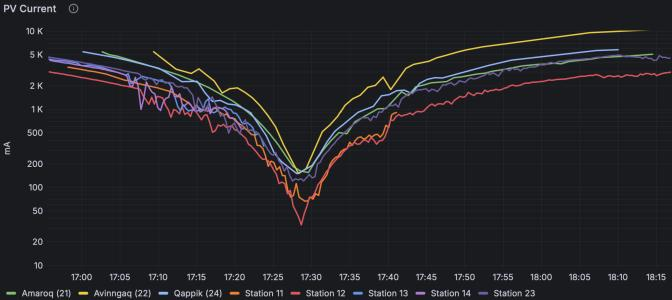
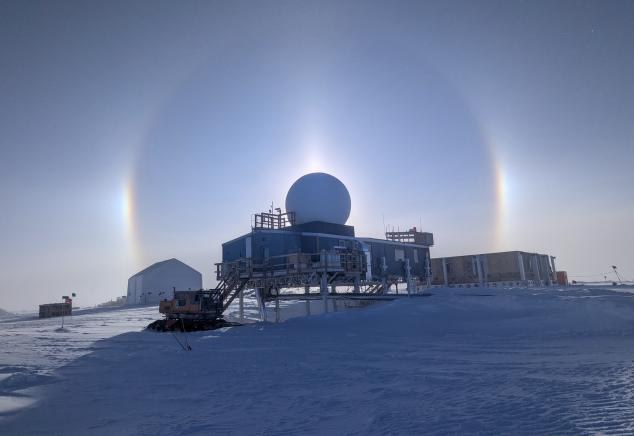
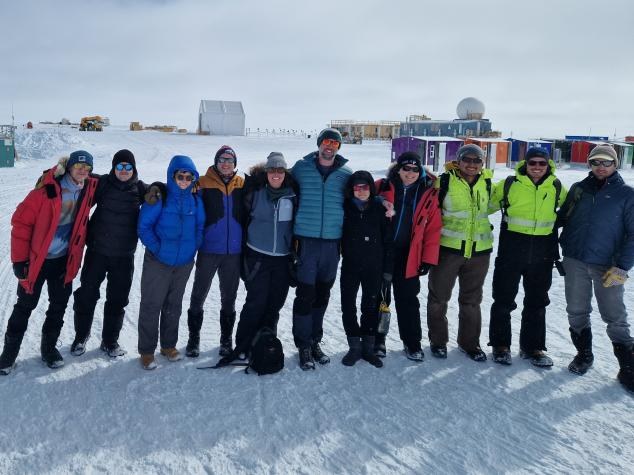
The following two pictures show a sun ring around Summit Station and a full season worth of RNO-G personnel during the mid-season shift-change (All pictures are from RNO-G field team members.)
P-ONE
(submitted by Matthias Danninger)
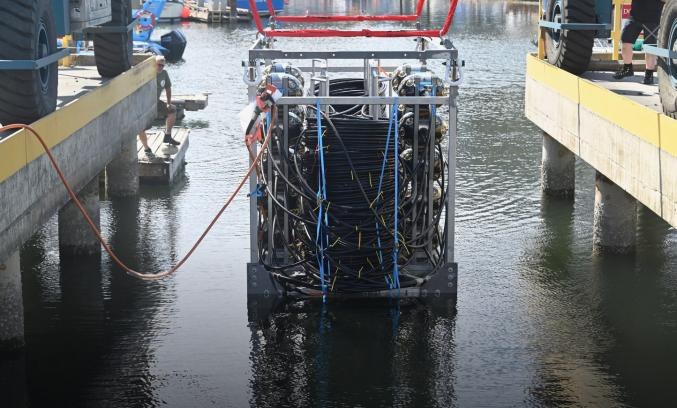
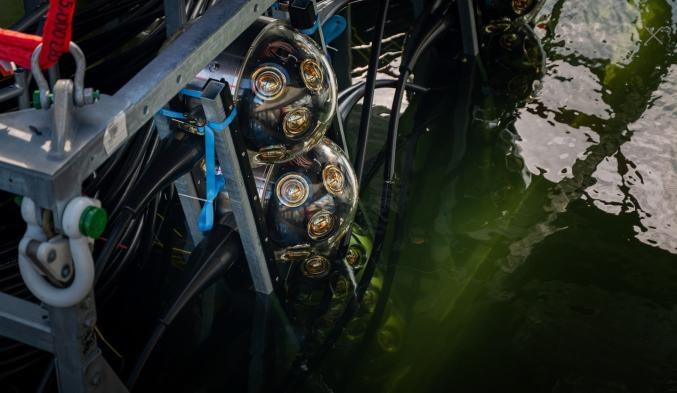
ONC scientists together with P-ONE collaborators successfully completed a shallow-water test of the first P-ONE detector line off Granville Island, Vancouver, in late June. This was a crucial marine field test for the deployment frame, junction box, backbone cable, and optical modules clearing a major check point to move forward with deploying the first of the P-ONE mooring this fall.
The submersion test went extremely well and was used to test the full system functionality for many hours under realistic conditions. These tests included many stress tests to communicate with all systems (including monitoring and calibration), benchmark data throughput, and check DAQ setups. The P-ONE team on the ground and the fantastic crew from the boatyard made this a full success and it allowed the collaboration to clear another milestone ahead of the fall deployment of this detector line.
Baikal GVD
(submitted by Igor Belolaptikov)
The summer expedition at the shore station of the Baikal Neutrino Detector is coming to an end. The work was primarily aimed at preparing the mechanisms and ice equipment for carrying out winter operations to deploy the next clusters. Planned work to improve the shore-based power supply system of the detector has been completed. The shore computing center has been reorganized. A new modern canteen has been installed at “106 km”. Sites have been prepared for expanding the residential shore infrastructure. The ice-cutting equipment and the system for laying the bottom cable, designed for two clusters, have been modernized and prepared for the winter expedition. The deployment tools have also been prepared for winter operations.
KM3NeT
(submitted by Paul De Jong and Jürgen Brunner)
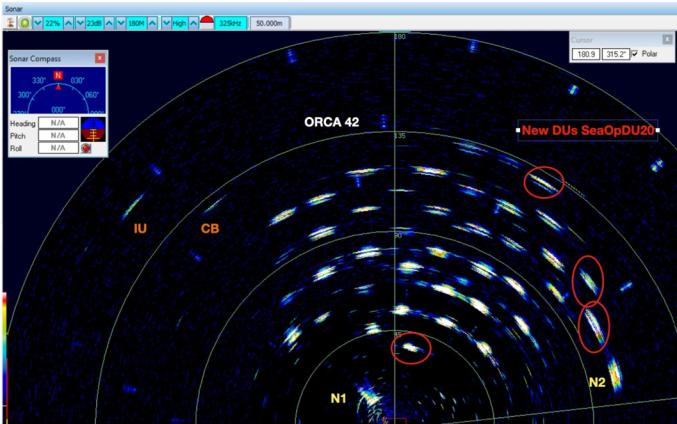
ORCA 42: In early July, ORCA sea operation number 20 added four detection units to ORCA, which now has 42 detection units deployed (see the sonar map below). One more sea operation for ORCA is planned in 2026. In Italy, preparations are in an advanced state for a large sea operation in the first part of September. Apart from the deployment of further junction boxes, cables and detection units, activities are organized around the acoustic positioning system.
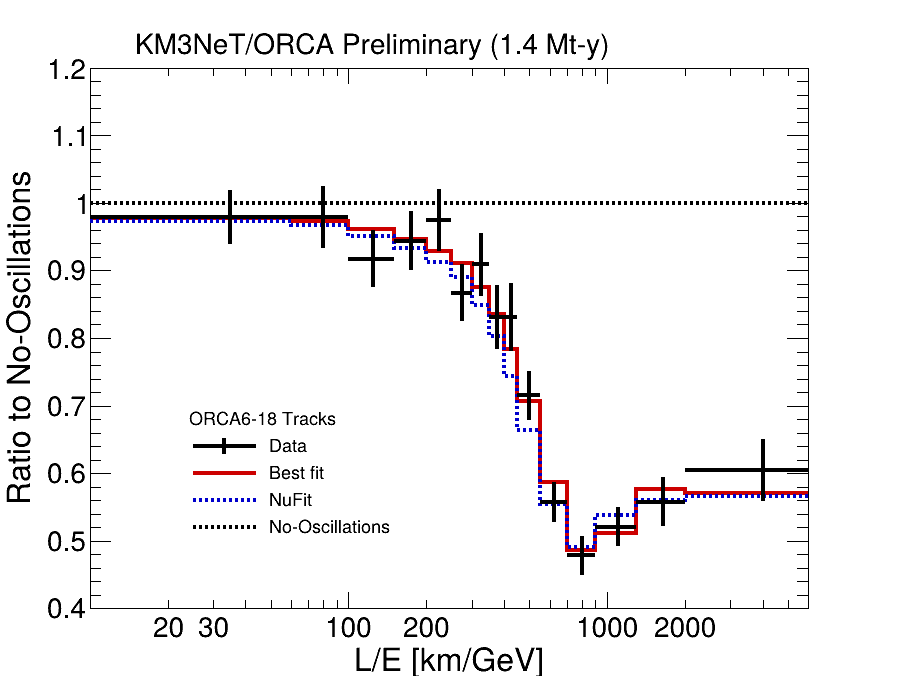
Oscillation Results from ORCA: At the XXXII International Conference on Neutrino Physics and Astrophysics in June, KM3NeT released new results on the measurement of neutrino oscillations, based on data taken over four years between early 2020 and end of 2023 with an evolving ORCA detector consisting initially of 6 detection units (DUs) in 2020 up to 18 DUs in late 2023. The final data sample consists of more than 17,000 neutrinos with an atmospheric muon contamination of less than 1% almost doubling the size of the data sample presented in 2024. The analysis was carried out in the phase space of reconstructed energy and zenith angle (see the L/E plot below) in three particle ID BDT classes: track, shower and intermediate with muon-neutrino CC events largely dominating (96%) the track class. The handling of systematic uncertainties had been radically revised compared to early analyses. Now, 25 nuisance parameters are considered in the fit, covering uncertainties in the neutrino flux and cross section as well as in the detector modelling.
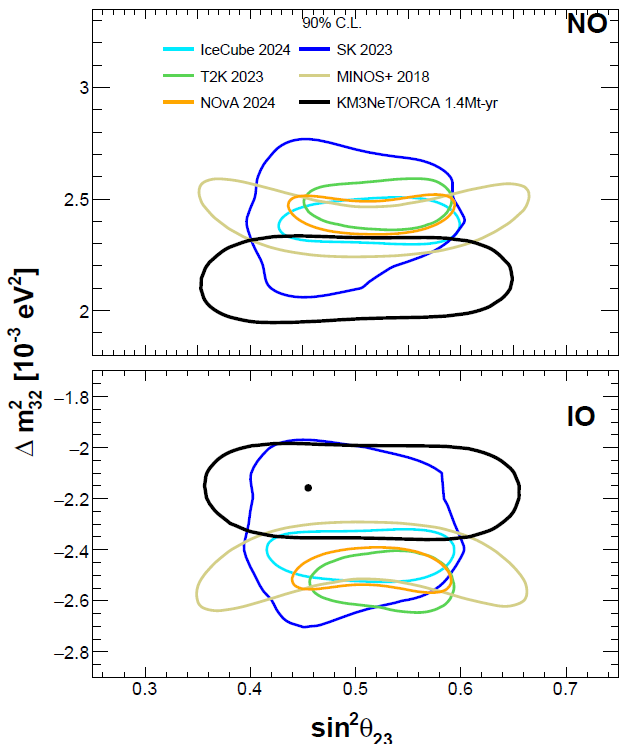
The data are very well described by the simulation yielding an overall goodness of fit p-value of 0.64. The two atmospheric oscillation parameters are measured as sin²(θ₂₃) = 0.45 +0.16 −0.05 and Δm²₃₁ = (−2.08 +0.08 −0.09) × 10⁻³ eV². A slight but insignificant preference for the inverted mass ordering (IO) is observed as indicated by the negative sign of Δm²₃₁. However, when combined with the Δm²₃₁ measurements from JUNO and Daya Bay, presented at the same conference, the IO hypothesis can be rejected with a p-value of 0.013 – more than 2 standard deviations (See the second of the figures).
The same data set has also allowed to measure the rate of ντ CC events which is found to be consistent with Standard Model predictions (0.97 +0.21 −0.23 compared to SM), the most precise determination of this quantity to date. Updated limits on the coupling parameters Ue4 and Uμ4 to a hypothetical fourth (sterile) neutrino flavour have been derived as well.
KM3NeT Collaboration Meeting: The KM3NeT Collaboration met in June in Bratislava, Slovakia, for an inspiring Collaboration meeting.
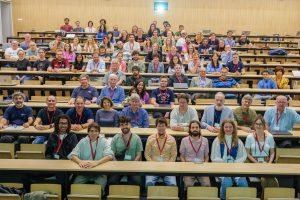
During the meeting, the KM3NeT Collaboration accepted the application of Würzburg University (Germany) to become full member of the collaboration. The next meeting will be held in Siracusa, Italy, in October.
During a special Institute Board meeting in July, INAF (the Italian Istituto Nazionale di Astrofisica) was accepted as a full member of KM3NeT. The INAF contribution to KM3NeT will focus on multi-messenger astronomy and consists of 5 clusters coordinated by INAF institutes in Milano, Firenze, Napoli, Palermo and Catania.
IceCube
Funding for IceCube M&O: In July, the U.S. National Science Foundation renewed a cooperative agreement with the University of Wisconsin–Madison to manage and operate the NSF IceCube Neutrino Observatory. The five-year, $53 million cooperative agreement entails the continued operation and maintenance of IceCube for the period 2026-2031.
Auroras at the Pole, rats in Denver: A spectacular display of auroras graced the sky above the Pole mid of August, and IceCube winterover Camille was poised to capture a nice shot:
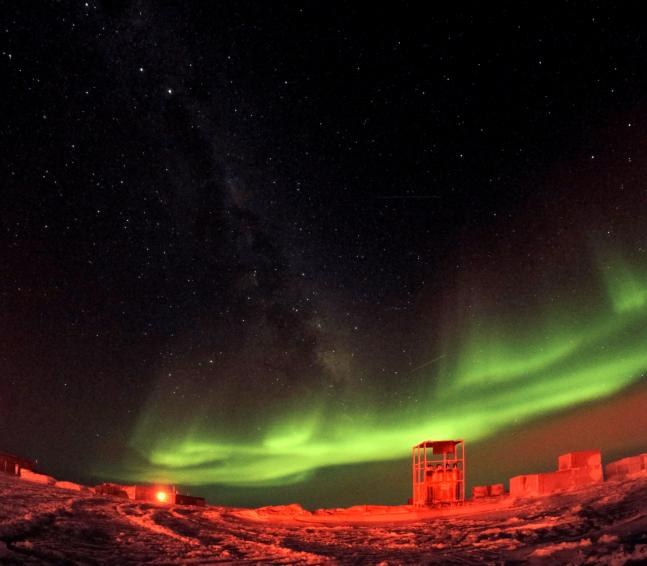
While data taking continues with the usual 99.8 to 99.9% Uptime, last Saturday the TDRSS satellite connection was out for some time – due to a rat chewing through a cable in Denver. Thankfully, the cable was repaired after a few hours, and the backlog was fully recovered the next day. Meanwhile, the IceCube routine continued with Upgrade calibration runs.
Collaboration Meeting and IPA in Madison: The next IceCube Collaboration Meeting will take place in Madison from October 19–23, 2026.
It will be preceded by the IceCube Astroparticle Symposium (https://events.icecube.wisc.edu/event/388/), October 14-16, 2026 at the same place. The timing of symposium is partly driven by two milestones in the IceCube community: over 15 years of continuous operation of the IceCube Neutrino Observatory, and the upcoming first light from the IceCube Upgrade.

Publications
The IceCube Collaboration has posted two papers in July/August.
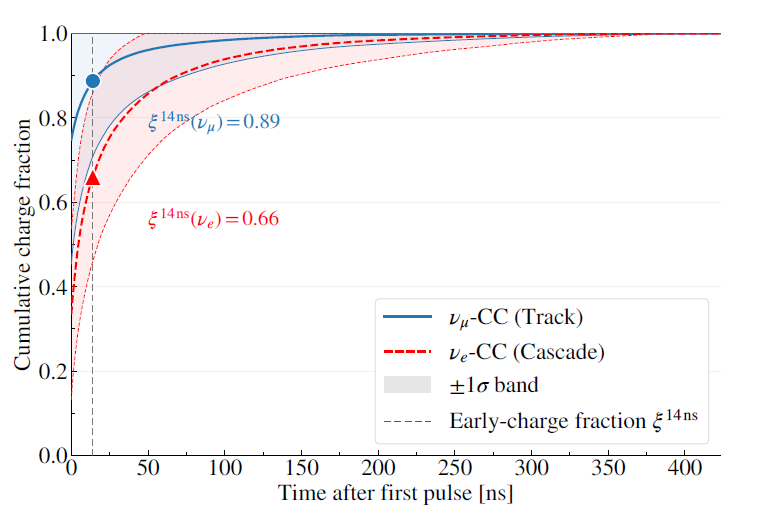
1 WavePID: Low-energy flavor identification using single-PMT time series in IceCube, submitted to JINST (https://arxiv.org/pdf/2607.02078). The main contributions come from Steven Young Eulig (Harvard University, Cambridge).
Abstract: The IceCube Neutrino Observatory identifies neutrino flavor through event morphology. Sparse photon detection makes this classification particularly challenging in the 5–100 GeV regime, the energy range relevant for oscillation measurements and searches for physics beyond the Standard Model. We introduce WavePID, a template-based log-likelihood-ratio classifier that exploits nanosecond-scale timing on individual detector modules through three observables: the distance to the reconstructed vertex, the early-charge fraction, and the module-to-module time difference. Evaluated on a cascade-enriched sample selected by a state-of-the-art graph neural network, WavePID improves both cascade purity and classification performance over the neural network alone. This demonstrates that per-module pulse timing carries flavor-identification information complementary to morphology-based classifiers, opening a new physics-motivated observable for low-energy neutrino reconstruction. Geant4 simulations associate this signal with differences in Cherenkov emission geometry between muon tracks and electromagnetic showers. These results motivate exploiting nanosecond-scale pulse timing in future low-energy classifiers and in detector designs with improved per-module timing in next-generation neutrino telescopes.
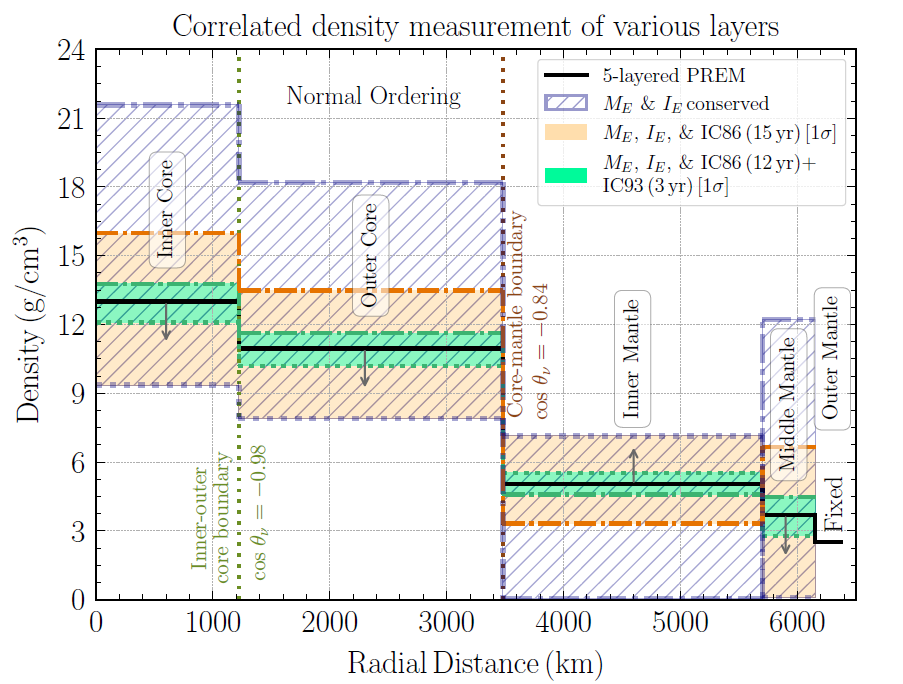
2 Estimating the sensitivity of the IceCube Upgrade to probe the interior of the Earth using atmospheric neutrino oscillations (https://arxiv.org/pdf/2608.06543). Submitted to Phys. Rev. D. Main authors are Sanjib Kumar Agarwalla, Sharmistha Chattopadhyay, Jayakumar Krishnamoorthi and Anuj Kumar Upadhyay (UW Madison, also Institute of Physics, Bhubaneswar, India).
Abstract: The IceCube Upgrade is a densely instrumented central region of the IceCube Neutrino Observatory, deployed during the 2025-26 polar season. It will reduce the detector’s energy threshold and improve overall reconstruction capabilities for multi-GeV atmospheric neutrinos, which in turn enhance their sensitivity to Earth matter effects as they traverse through the deep Earth. In this study, we describe the potential of the IceCube Upgrade to observe Earth matter effects on atmospheric neutrinos and estimate the detector’s sensitivity to probe key features of the Preliminary Reference Earth Model by utilizing these observations. We highlight the IceCube Upgrade’s capability to estimate the mass of the Earth and verify the non-homogeneous distribution of matter density within the Earth. We also estimate the IceCube Upgrade sensitivity to measure the correlated densities of the Earth layers while incorporating constraints from the mass and moment of inertia of the Earth. Neutrino-based results would be independent and complementary to the seismic and gravitational measurements.
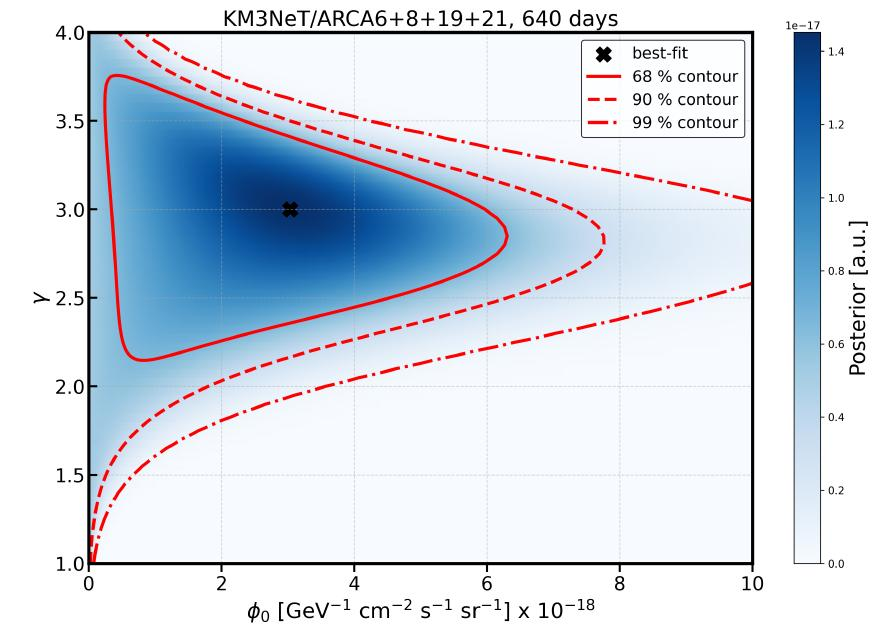
The KM3NeT collaboration has submitted a paper Search for an all-sky and a Galactic Ridge diffuse neutrino emission with the first 2 years of KM3NeT/ARCA data to JCAP (posted at https://arxiv.org/pdf/2608.06163). Main authors are Francesco Filippini (INFN Bologna, Italy), Leonidas Kalousis and Vasileios Tsourapis (NCRS Demokritos, Athens, Greece).
Abstract: We report on the search performed for a diffuse astrophysical neutrino flux from the full sky and from a specific region of the Galactic plane, the Galactic Ridge. The study uses the dataset collected with the first KM3NeT/ARCA configurations with 6, 8, 19, and 21 active detection units, corresponding to a total livetime of 640 days. For the all-sky analysis, the fitted single-flavour astrophysical neutrino flux parameters, under the single power-law assumption, are ϕ1f0 = 3.0 (+2.1 −2.0) × 10⁻¹⁸ GeV⁻¹ cm⁻² s⁻¹ sr⁻¹ with spectral index γ = 3.00 (+0.30 −0.35) at 68% credible level. The Galactic Ridge fit does not yield constraints for the flux parameters with the current sensitivity. For both analyses upper limits are derived and compared with state-of-the-art measurements. While the analysis of these datasets has not yielded statistically significant results, the developed methods provide a solid basis for future measurements with the KM3NeT detector.
![Envelope of the 90% C.L. upper limits drawn for selected spectral indices γ ∈ [2.2, 2.7] obtained with the full combined](https://www.globalneutrinonetwork.org/wp-content/uploads/2026/09/gnn-2026-08-arca-allsky-limits.png)
![Envelope of 90% C.L. upper limit for γ ∈ [2.2, 2.7] for the Galactic Ridge diffuse flux shown as a function of the true](https://www.globalneutrinonetwork.org/wp-content/uploads/2026/09/gnn-2026-08-arca-galactic-ridge-limits.png)
The RNO-G Collaboration has submitted a paper The beamformed trigger of RNO-G: its design and in-field performance to JINST (posted on https://arxiv.org/pdf/2607.24470). Main author is Ryan J. Krebs (Penn. State University).
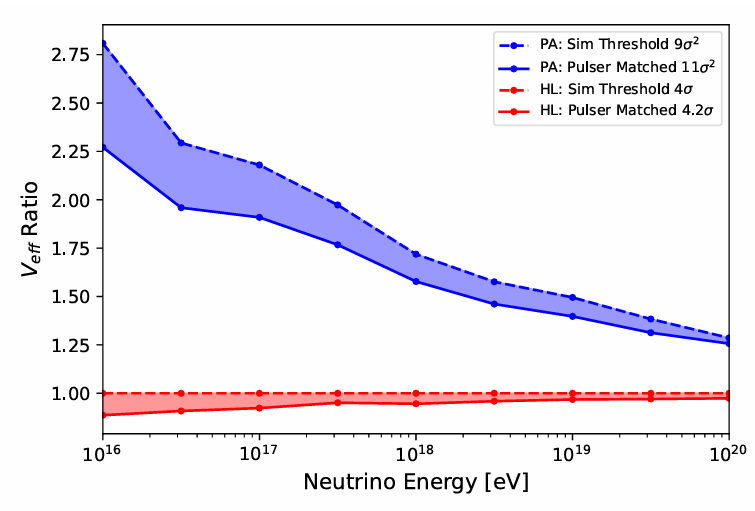
Abstract: The Radio Neutrino Observatory in Greenland (RNO-G) is a neutrino detector under construction at Summit Station, with 8 out of a planned 35 stations currently deployed. We have designed and deployed a new phased array (PA) trigger based on delay-and-sum beamforming and power integration. This trigger improves detector performance by suppressing thermal noise and better targeting neutrino-induced Askaryan signals. The new PA trigger has been deployed since the 2025 season. The trigger performance has been characterized using test pulses and calibration pulsers both in the lab and in-situ, and we find across these tests a 25% average reduction in the signal-to-noise ratio (SNR) needed to trigger on signals. Simulations are shown to be representative of the detector, and simulated trigger efficiencies are within 10% of measured data. Following the in-situ trigger validation, we use data-driven trigger performance to inform simulations of the detector effective volumes. The PA trigger increases our effective volume significantly, by over a factor of 2 below 0.1 EeV and at least a factor of 1.3 at the highest energies of 100 EeV.
Obituary
Todor Stanev, 1945-2026
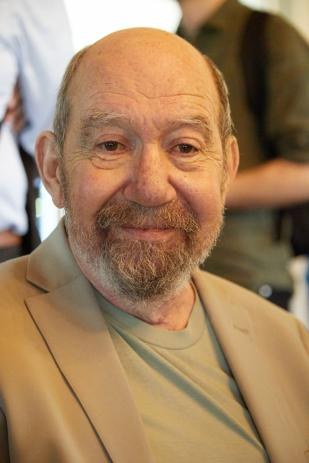
Todor S. Stanev, an influential physicist, cosmic-ray researcher, and longtime member of the Bartol Research Institute at the University of Delaware, died in Philadelphia on Aug 10. He will be remembered for a scientific career that spanned more than five decades of development in high-energy and astroparticle physics.
Todor was born in Bulgaria in 1945. After graduating with MS in Physics from Sofia University in 1968 he joined P. N. Lebedev Institute in Moscow as a research associate, working at the Tien Shan mountain cosmic ray station. Back to Sofia, he received his PhD in 1977. At the ICRC 1979 in Plovdiv Todor made connections to the broader cosmic ray community, resulting in an invitation to the US as a visiting scholar, and an appointment at the Bartol Research Institute in 1981. He joined the faculty in 1988 until he became emeritus in 2021.
Todor is widely recognized for his contributions to the field of particle astrophysics. He had a theoretical and phenomenological understanding of particle properties and interactions. He was a key developer bringing Monte Carlo techniques from laboratory particle physics to describe cosmic ray induced air showers, and migrated those techniques to other environments: including rock, ice, the solar atmosphere, intragalactic and intergalactic space.
Early in his career Todor developed an electron-photon cascade Monte Carlo to model longitudinal and transverse profiles of air showers. This effort evolved to incorporate LPM effects into the EGS system. Early work also involved attempts to understand the muonic cores of air showers at Tien-Shan as a consequence of hadronic interactions. That thread evolved with the community’s broader understanding of hadronic interactions, ultimately leading to the development of the SIBYLL package for modeling hadronic interactions in cosmic ray air showers. He was also a developer of the SOPHIA package for photo-nuclear interactions in astrophysics, leading to a better understanding of propagation of UHE cosmic rays and production of cosmogenic neutrinos.
A main result of these developments was Todor’s contributions to a better understanding of air showers, applied to SPASE/AMANDA and IceCube at South Pole, and especially at EeV energies with the construction of TA and Auger. He pioneered the use of atmospheric muons and neutrinos as a probe of air shower physics and the primary cosmic ray spectrum and composition. The Bartol neutrino fluxes have been a standard for the community, incorporating a model for the atmosphere of the whole Earth, and incorporating subtle effects due to Earth’s magnetic field. Todor’s treatment of magnetic fields is incorporated into other works – including cosmic ray interactions on the solar surface, propagation of cosmic rays through galactic magnetic fields, and at energies above an EeV the deflection of UHE protons on intergalactic scales.
Todor was responsible for two contributions core to the interests of the GNN community. He was co-author of a 1989 conference proceeding (Astrophysics in Antarctica) which is the first public case to move the target site for a kilometer scale detector of astrophysical neutrinos from deep ocean to South Pole. He was co-author of a 1992 paper using detailed simulations to calculate Askaryan radiation from neutrino induced electron-gamma showers in glacial ice, now considered the most promising technique for detection of cosmogenic neutrinos. Together, these constitute a theoretical framework for development of IceCube-Gen2.
Throughout his career, Todor made significant service contributions to our field: acting as receiving editor for Particle Astrophysics, contributor to the Review of Particle Physics, co-author of the seminal “Particle astrophysics with high energy neutrinos” (1995), and author of the book “High Energy Cosmic Rays”, now in its third edition. Early career scientists will know him as co-director (1998-2026) of the International School on Cosmic Ray Astrophysics, in Erice, Italy.
(submitted by David Seckel and Serap Tilav)
Impressum
GNN Monthly is the Monthly Newsletter of the Global Neutrino Network
https://www.globalneutrinonetwork.org
Editor: Christian Spiering, for the GNN Board
christian.spiering@desy.de