
105th Edition — May 20, 2026
In preparation of the Amsterdam GNN Meeting, this special edition of GNN Monthly contains status reports of ANTARES, P-ONE Baikal-GNN, KM3NeT and IceCube (RNO-G will have a special presentation at the Meeting).
ANTARES
(submitted by Antoine Kouchner)
ANTARES has entered a final phase consisting of producing latest physics results in so-called “Legacy papers.” Very few new studies are ongoing with a recent notable exception just published as:
Antares, A. Albert et al., Mach. Learn.: Sci. Technol. 7 035004 e-link
Deep learning framework for enhanced neutrino reconstruction of single-line events in the ANTARES telescope
While we have produced most of the planned Legacy papers, the list of which you can find below, we are still working on the final searches for neutrinos counterparts to GRBs. Even if this has been constrained by IceCube and even by ANTARES with previous studies based on partial data sets, we believe that it is worth investigating the known GRBs which have not been searched for with neutrinos with the full ANTARES dataset. We hope to publish the on-going study by the end of the year. Among other things, searches for nuclearites and LIV effects associated to GRBs are also under studies. We are also working on providing the community with our lacy results on “Search for dark matter annihilation in the Sun using the full ANTARES dataset”.
Whenever relevant, combining ANTARES latest results with KM3NeT and/or IceCube is envisaged, depending on the available human resources.
Note that a summary of ANTARES activities and results have already been summarized in a review published on Phys. Reports
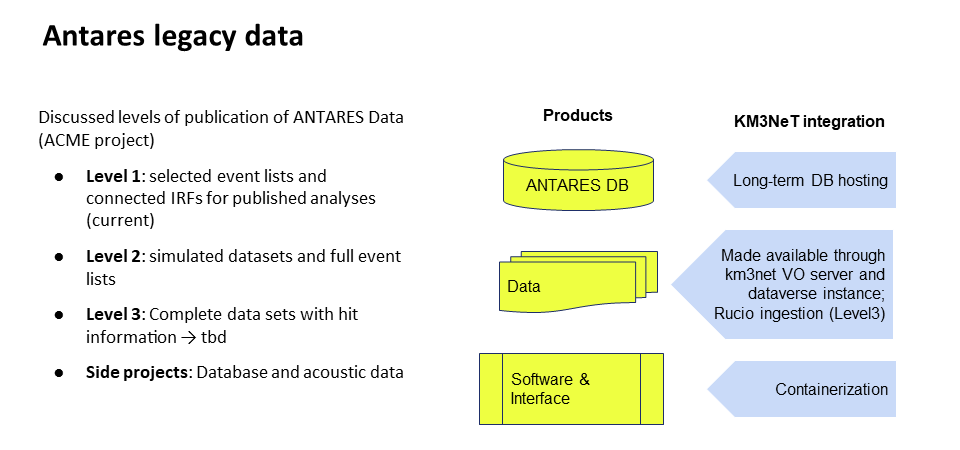
Concerning the planned policy of making data public, one has to understand that this was not originally foreseen. While several data sets are already accessible from the ANTARES web page, always associated with a corresponding publication, we are string to adopt a more general approach based on KM3NeT software and within the context of ACME. The current stage is that “.fits” files for the legacy analyses (selected data events) are already produced. The corresponding selection is further being processing for the Monte Carlo files needed to accompanying IRF files describing the detector response. We intend to publish the data in the ANTARES dataverse of our open data center (opendata.km3net.de) and have accompanying notebooks available that allow to reproduce some of the key results of the legacy analyses. The event lists will also be ingested on the KM3NeT VO server (vo.km3net.de). A scheme of the procedure can be seen in the figure.
Finally, concerning the legacy of the ANTARES optical modules, here are some possibilities: Several experiments are interested in using or use already either the complete ANTARES optical modules or the PMTs.
- Lactel (CR propotype in the Geneva lake): 22 modules have been fully retested and qualified following specifications from early Antares modules testing in 2001, 18 of these modules are foreseen for deployment later this year, 2 of them take already data in the lake Geneva, data look good
- SWGO has (via ECAP) received ~300 modules. They have setup a PMT extraction procedure. About 100 modules have been disassembled, 90% of the extracted PMTs are found ok for their purpose. SWGO is interested in receiving ~100 modules more, sufficient to equip the entire SWGO prototype with ANTARES PMTs – negotiations ongoing
- The project nuScope is putting together a proposal (CPPM) for a short baseline tagged neutrino beam at CERN. Antares PMTs could equip the WC near detector (~300 needed). The test bench from Lactel at CPPM could be reused
List of Legacy papers:
Antares, A. Albert et al. Journal of High Energy Astrophysics 53 (2026) 100565 e-link
Search for Diffuse Galactic Neutrinos with the Full ANTARES Telescope Dataset
Antares, A. Albert et al. Journal of High Energy Astrophysics 50 (2025) 100500 e-link
Search for Magnetic Monopoles with the Complete ANTARES Dataset
Antares, A. Albert et al., Physics Report Volumes 1121–1124, 5 June 2025, Pages 1-46 e-link
The ANTARES detector: two decades of neutrino searches in the Mediterranean Sea
Antares, A. Albert et al., JCAP 09 (2024) 042 e-link
Results of the follow-up of ANTARES neutrino alerts
Antares, A. Albert et al., JCAP 08 (2024) 038 e-link
Constraints on the energy spectrum of the diffuse cosmic neutrino flux from the ANTARES neutrino telescope
Antares, A. Albert et al., Exp. Astron. 59, 6 (2025) e-link
Acoustic Positioning for Deep Sea Neutrino Telescopes with a System of Piezo Sensors Integrated into Glass Spheres
Antares, A. Albert et al., JCAP 08 (2023) 072 e-link
Review of the online analyses of multi-messenger alerts and electromagnetic transient events with the ANTARES neutrino telescope
P-ONE
(submitted by Matthias Danninger)
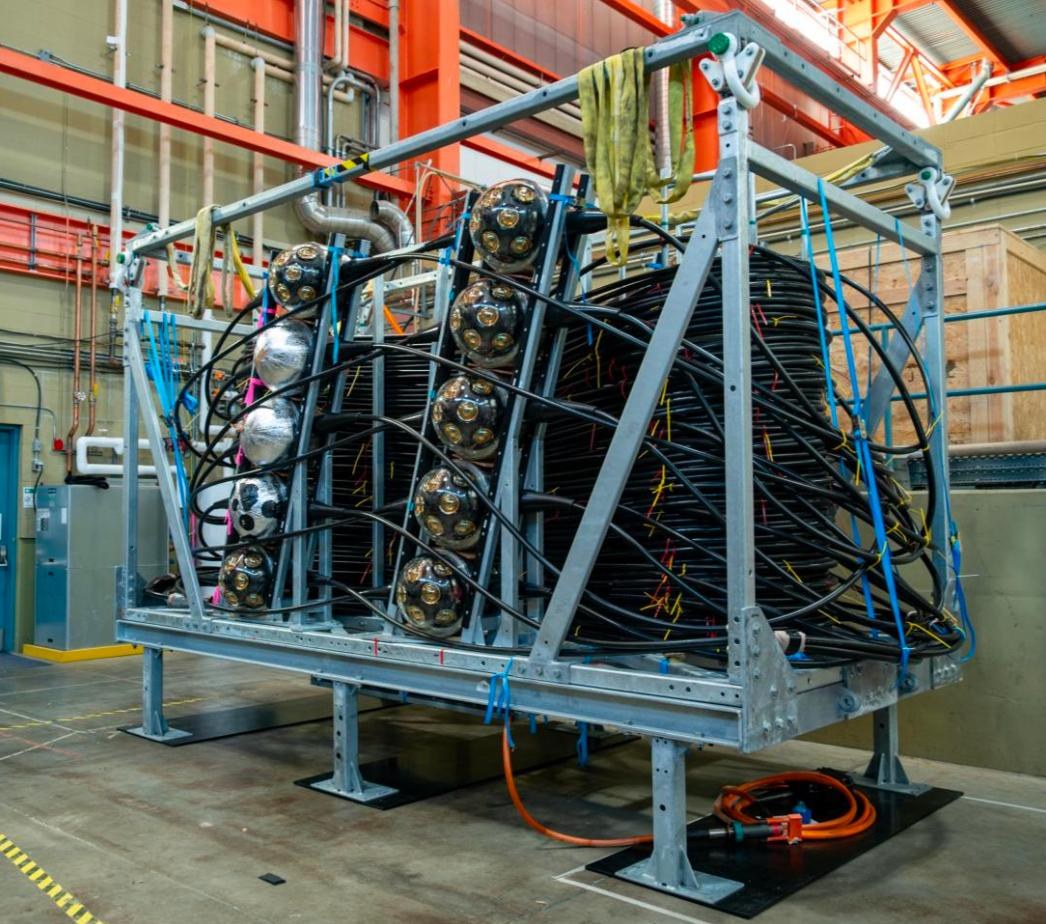
The past several months have marked a major milestone for the P-ONE Collaboration and our partner, Ocean Networks Canada (ONC), with the successful final integration of our first full-scale detector line, P-ONE-1, at the TRIUMF cleanroom facilities in Canada. On April 28, the 1 km-long detector line was fully assembled and integrated (Figure 1), representing the culmination of nearly three years of coordinated international development and engineering efforts.
Comprehensive final quality-control and communication tests at TRIUMF confirmed that all major detector systems, including PMT readout channels, calibration instruments, timing distribution, and data-network components, are operating as designed. With these successful tests completed, P-ONE-1 is now deployment ready!
Preparing for Final Integration
The construction of P-ONE-1 brought together contributions from institutes across Canada, the United States, and Europe. The subsea backbone cable was developed in close collaboration with McArtney, while optical modules with integrated PMTs (P-OMs) were produced by the Technical University of Munich (TUM). Mainboard electronics were provided by Michigan State University (MSU), interface electronics by the University of Alberta (UoA), and calibration instrumentation by teams from Simon Fraser University (SFU), UoA, and the Institute of Nuclear Physics (INP PAS), Kraków.
Prior to integration, all detector components underwent extensive characterization and acceptance testing at TRIUMF. Particular attention was devoted to mitigating electromagnetic interference (EMI) and validating the mechanical robustness of the final integrated optical modules under realistic operational conditions.
Following successful acceptance tests, all components were sequentially integrated onto the backbone cable and connected to the titanium pressure housings (Figure 2). After each integration stage, the detector systems were verified through dedicated power, communication, and DAQ functionality tests to ensure stable and reliable operation.
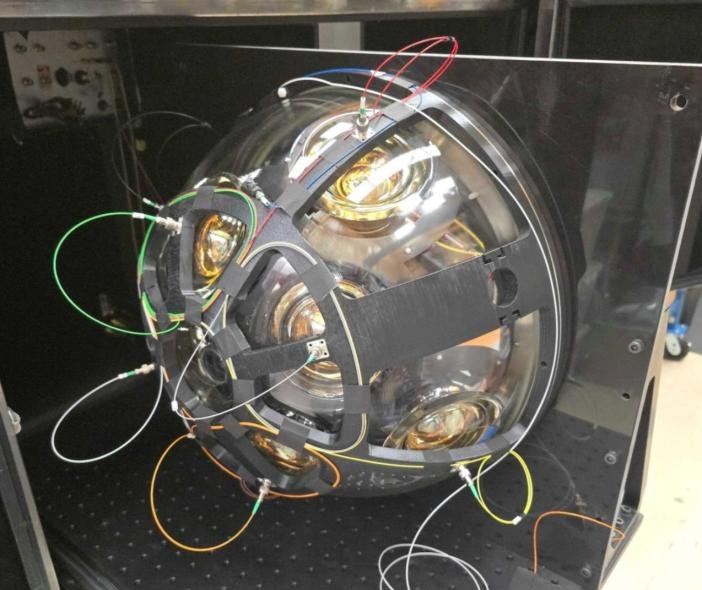
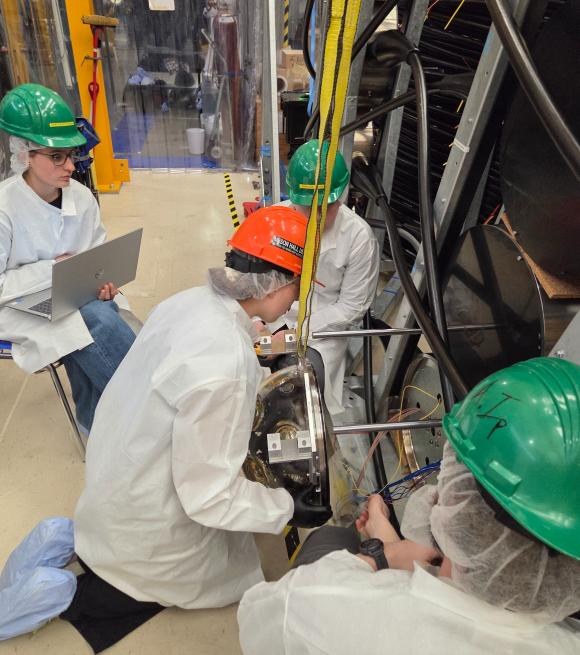
Figure 2: Left: P-ONE module half-sphere within the final acceptance test stand. Right: P-ONE module is being integrated on the backbone cable and final cable, and fibre connections are made.
Final Assembly Phase
The detector line terminates in the newly developed string Junction Box (sJB), jointly designed and produced by ONC and the P-ONE Collaboration. Final assembly required the careful termination and integration of all power and optical-fiber connections before the sJB was sealed within the TRIUMF cleanroom environment (Figure 3, left).
In the final assembly step, the sJB was mounted within a dedicated subsea support frame and mechanically integrated with the main P-ONE detector structure (Figure 3, right). This delicate operation was successfully completed with the support of the TRIUMF operations team.
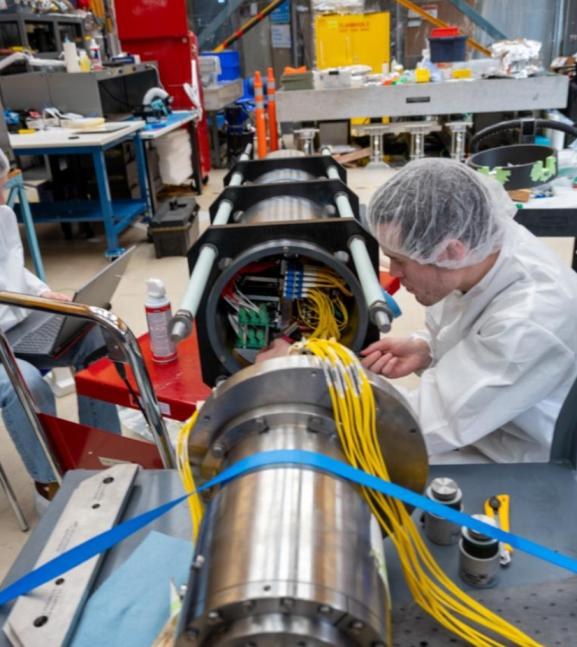
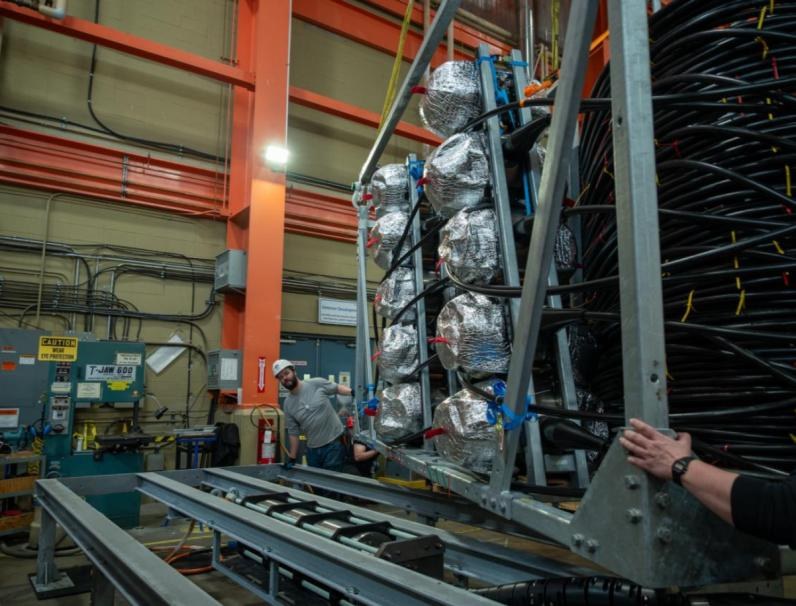
Figure 3: Left: Work on the fiber and cable terminations leading to the sJB. Right: Final connection of the subsea support frame (housing the sJB) with the main detector frame.
Preparing for Deployment
A final pre-deployment shallow-water wet test is planned for June near Vancouver. Together with ONC, the collaboration aims to deploy P-ONE-1, including the full acoustic calibration infrastructure on the seafloor, by the end of August 2026. Detector commissioning and initial data-taking activities will commence immediately following deployment.
The deployment campaign will also include the installation of a new 30-km subsea cable extension from the original Cascadia Basin node to a new host location outside the recently established marine protected area Tang.ɢ̱wan – ḥačxwiqak – Tsig̱is. To minimize regulatory risks and ensure uninterrupted project progress, the Canada Foundation for Innovation awarded ONC and P-ONE a special one-time infrastructure grant to support the cable relocation. This exceptional out-of-cycle support represents a strong endorsement of the long-term scientific vision of P-ONE.
Looking Ahead: The P-ONE Demonstrator Phase
The next major project stage, the P-ONE Demonstrator, will expand the observatory to up to six detector lines and remains on schedule and within budget. Procurement of long lead-time components, including subsea marine cables, PMTs from Hamamatsu, and titanium structures from McArtney Canada, has already begun.
Detector production facilities across Canada, the United States, and Europe are actively preparing for this next construction phase. Final assembly and system testing of the Demonstrator detector lines are expected to take place at TRIUMF between 2027 and 2028.
Recent Publications
Alongside detector construction activities, the collaboration continues to advance the scientific and technical documentation of the experiment. Over the past year, P-ONE researchers have published new results on:
- the acoustic positioning system (JINST 20 (2025) P07003),
- the optical calibration system (arXiv:2603.09495), and
- long-term studies of sedimentation and biofouling mitigation strategies (EPJ C 86 (2026) 172).
Additional publications covering the optical modules, detector electronics, and data/timing network infrastructure are currently in preparation.
Baikal-GVD
(submitted by Zhan Dzhilkibaev and Dmitri Zaborov)
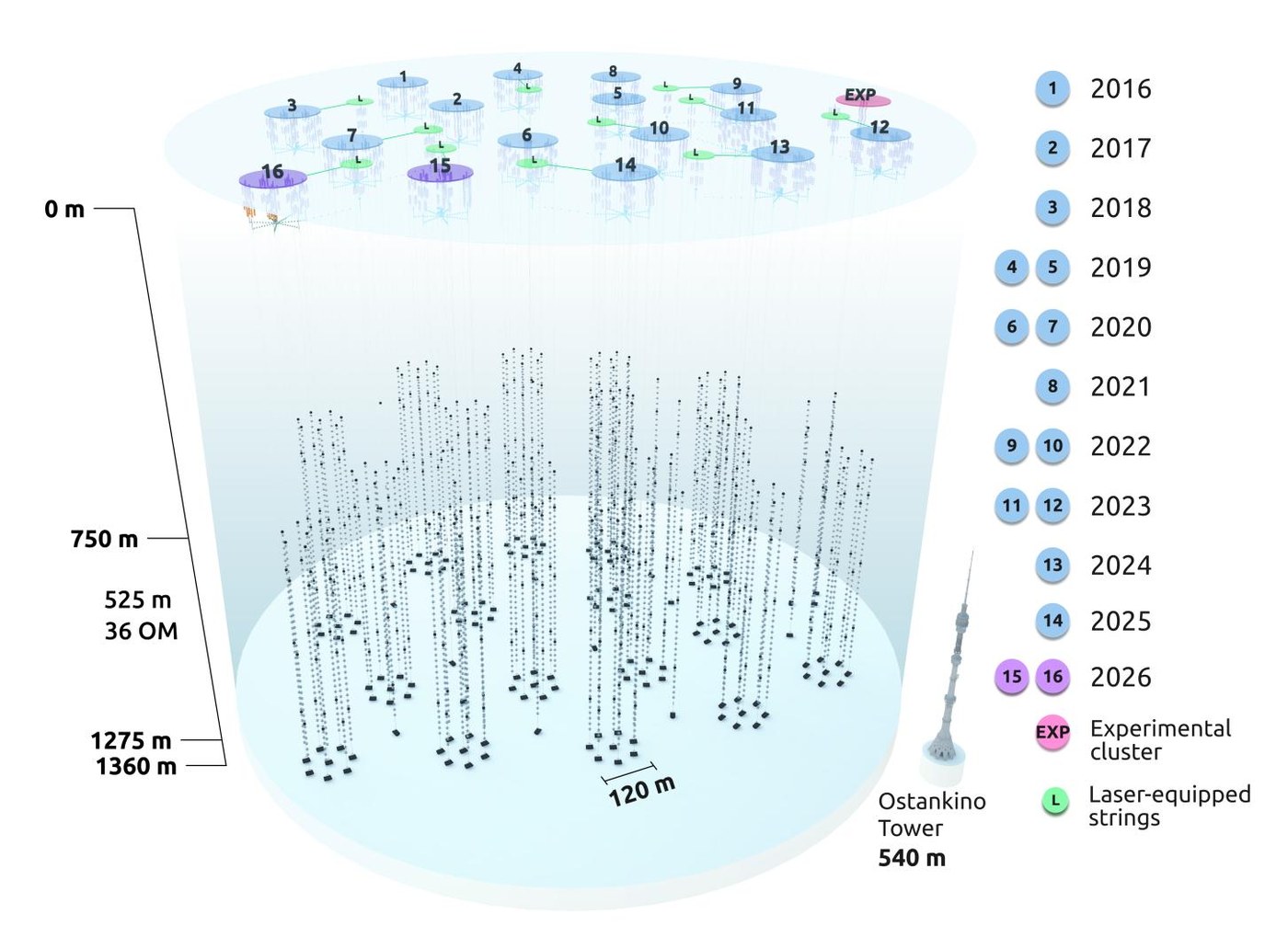
Baikal-GVD has been under construction since 2016 and is nearing completion in the next couple of years. Currently it consists of 4896 optical modules arranged on 136 strings, occupying a water volume of about 0.8 km³. We briefly review its design, status and main scientific results achieved so far.
Baikal-GVD is located in the Southern basin of Lake Baikal at 51°46’ N 104°24’ E, 3.6 km offshore. The site depth is 1360 m. The light absorption length in the deep lake water reaches 22 m, while the light scattering length is of the order of 40 m. After accounting for the forward-peaked diagram of light scattering, the effective light scattering length in the relevant wavelength range is typically between 200 m and 480 m, comparable to that of the deep Mediterranean water.
The Baikal-GVD optical module (OM) is based on a 10-inch high-quantum-efficiency PMT (Hamamatsu R7081-100). Each string holds 36 OMs placed with a 15 m vertical spacing, at depths between 750 m and 1275 m below lake surface. The strings are grouped in clusters, with eight strings per cluster, 60 m horizontal spacing between the strings within a cluster, and 250–300 m distance between cluster centres. Additional, 9-th strings equipped with laser beacons and, optionally, with OMs are installed in-between the GVD clusters.
Currently, Baikal-GVD consists of 16 regular clusters and an experimental cluster – see Fig. 1. The detector array is mostly healthy, with well over 90% of all the optical modules currently operational, although there are several string failures which are to be fixed in the course of future winter campaigns. It is planned to reach the final, 20-cluster configuration of the GVD array in 2028-2029.
The experimental cluster currently consists of 5 strings. Three of these strings are largely identical to regular GVD strings, except that the communication between the electronics modules is done via optic fibres instead of copper cable wires. The two other strings are HUNT prototype strings which are a product of cooperation with IHEP (Beijing, China). The HUNT strings use larger optical modules, based on a 20″ MCP-PMTs (microchannel plate PMTs). The two HUNT strings hold 18 and 24 such OMs, respectively. All these experimental strings are intended primarily for long-term studies of reliability of underwater cables and connectors, as well as for in situ studies of new optical module designs and high-bandwidth data acquisition systems.
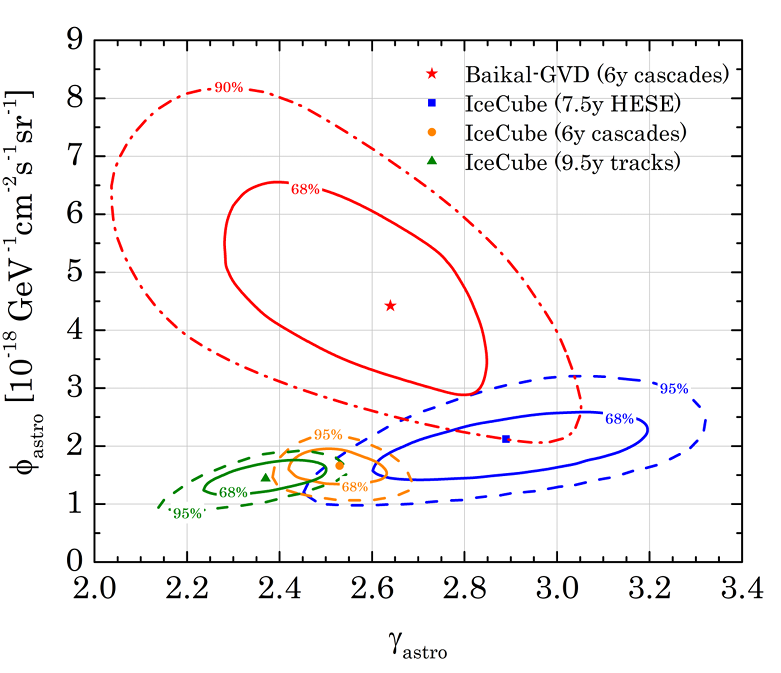
The data collected from the partially constructed Baikal-GVD array have been used for several physics analyses. In particular, the diffuse cosmic neutrino flux has been detected by Baikal-GVD using cascade-like events with a statistical significance above 5σ [1]. The spectral fit broadly agrees with earlier measurements by IceCube, particularly with HESE results, except for a higher flux normalization in the case of Baikal-GVD (see Fig. 2). The reasons for this tension are going to be followed up with more analysis efforts. Interestingly, one of the cascade events might come from the blazar TXS 0506+056 [2]. Additionally, using the non-observation of cascade-like events above 103.5 TeV, constraints on the diffuse flux of multi-PeV neutrinos have been computed [3].
Using a sample of Baikal-GVD cascade events with estimated neutrino energies above 200 TeV, a statistical test for correlation with the Galactic plane has been performed. For this, the median of the absolute value of galactic latitude was used as a test statistic. The analysis suggests a 2.5σ excess of neutrinos from low Galactic latitudes [4], adding up to the evidence for a Galactic neutrino flux reported earlier by IceCube and ANTARES.
Recently, first upper limits on point-like neutrino sources using Baikal-GVD tracks have been reported [5]. The search returned null results, with the highest significance candidate object being the young massive stellar cluster Westerlund 1 (pre-trial p-value of 0.0036, the lowest among 92 trials).
1) https://arxiv.org/pdf/2507.01893
2) MNRAS 527 (2024) 8784, https://arxiv.org/abs/2210.01650
3) Phys. Rev. D, 112, 8, 083025, https://arxiv.org/pdf/2507.05769
4) ApJ 982 73, https://arxiv.org/pdf/2411.05608
5) https://arxiv.org/pdf/2603.21261
KM3NeT
(submitted by Luigi Fusco)
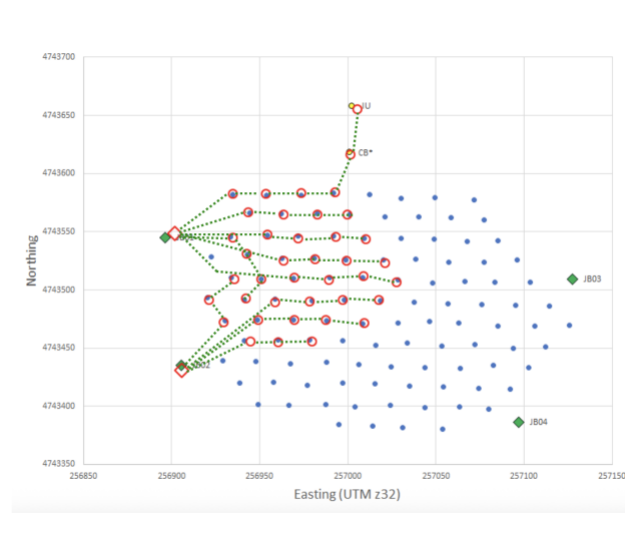
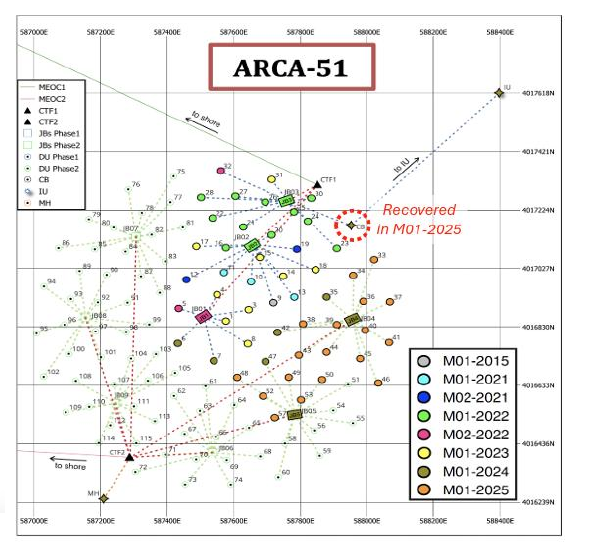
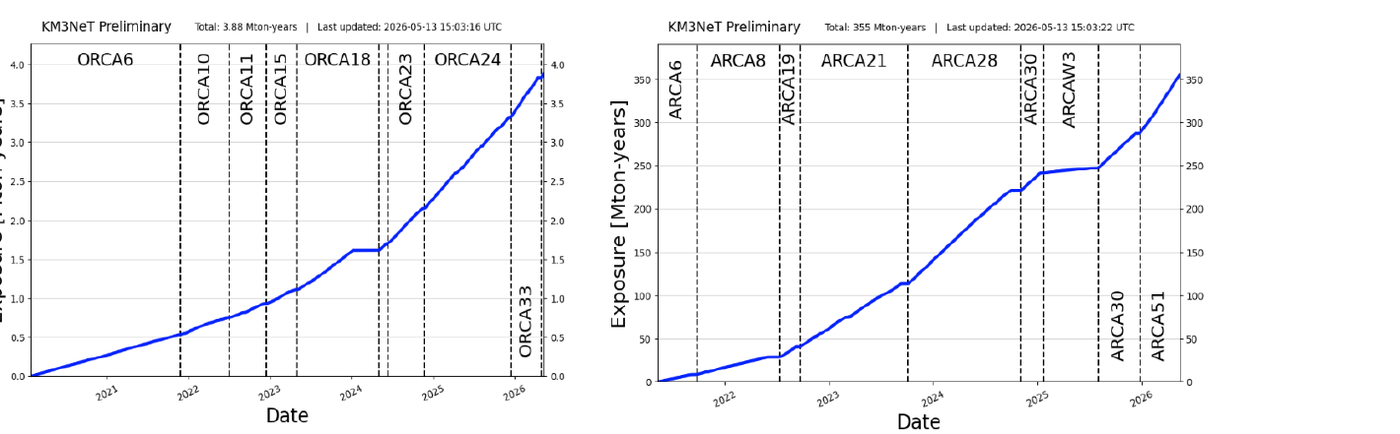
Since the last MANTS meeting in March 2024, the KM3NeT Collaboration has continued the construction and expansion of both the ARCA and ORCA detectors, which now comprise 51 and 38 deployed detection units, respectively. At the same time, the collaboration has further advanced the physics exploitation of the growing datasets. The major scientific highlight of the period was undoubtedly the detection of KM3-230213A, the highest-energy neutrino ever recorded. More broadly, 2025 marked the collaboration’s most productive year to date, with 12 papers accepted in peer-reviewed journals and additional results already published or under review in 2026.
Data has been acquired under stable conditions throughout most of the period. 37 ORCA detection units are currently taking data, while 45 of the 51 deployed ARCA units are operational. The average detector efficiency in 2025 (2026) was 78% (91%) for ARCA and 89% (76%) for ORCA, accounting for sea campaign and commissioning periods, calibration runs, DAQ tests and temporary marginal instabilities in data taking.
The expansion of both detectors has been accompanied by continuous advances in detector calibration, data processing, data quality assessment, and detector simulations. Calibration efforts have focused on improving the accuracy of PMT efficiency measurements and timing calibration within individual optical modules (“intra-DOM”), using in situ data arising from potassium-40 backgrounds. In parallel, the calibration of the time, position, and orientation of the detection units (“intra-DU” and “inter-DU”) has been refined using both dedicated calibration devices (acoustic emitters and receivers, compasses, and accelerometers) and atmospheric muons. Furthermore, atmospheric muon data have been used to improve measurements of the optical properties of water at the ORCA site using stopping muons, which provide a clean signal for characterising the light emission and detection pattern of the PMTs. Finally, an updated absolute positioning calibration campaign for the ARCA detection units is currently underway, based on dedicated acoustic measurements. The status of this process will be presented at the upcoming GNN meeting.
The consequent full reprocessing of data and Monte Carlo datasets is ongoing for both detectors. The campaign covers data acquired between summer 2022 and summer 2025 for ARCA, and up to the end of 2025 for ORCA, enabling the re-analysis of previously collected datasets with updated calibrations and improved simulations. This effort is supported by the expanded role of the CNAF computing facilities in Italy, where the resources allocated to KM3NeT are now being fully utilised for data processing and simulation workflows. This complements the long-time support from the IN2P3 Computing Centre in Lyon. The transition is designed to ensure the required processing capacity for the expected data volumes, as both detectors approach their full configurations. To support this evolution, a more distributed computing model is being developed, based on GRID computing and the RUCIO infrastructure for data management and access.
Upcoming data analyses will also benefit from renewed efforts to refine event selections in both ARCA and ORCA. As the detectors continue to expand, purer neutrino samples can be extracted, reducing the systematic uncertainties associated with residual backgrounds. In parallel, the event reconstruction codes have been further optimised to support these improvements. Finally, a unified approach to the estimation of atmospheric lepton fluxes has been adopted for both detectors, based on the state-of-the-art flux predictions provided by daemonflux. This will enable a consistent treatment of atmospheric backgrounds across ARCA and ORCA.
Oscillation analyses are currently being prepared using the 1.5 Mton-year sample, covering data acquired up to 2024, and will be presented at conferences this summer. In parallel, work has begun to extend the dataset to at least 3.4 Mton-years (up to ORCA24) for the next analysis cycle planned for 2027. A significant gain in sensitivity is expected from the increased exposure, considering that the oscillation results published to date were based on 715 kton-years of data (up to ORCA11) [https://pos.sissa.it/485/152/]. The primary focus of the upcoming analyses will be the standard oscillation programme, towards the determination of the neutrino mass ordering, together with searches for tau neutrino appearance. Additional studies will target sterile neutrinos and possible Lorentz invariance violation effects. Over the past year, the analysis framework has also undergone a thorough review, leading in particular to several improvements in the treatment of systematic uncertainties.
Follow-up studies of KM3-230213A have remained a central focus of the KM3NeT cosmic neutrino searches. Several possible astrophysical interpretations have been investigated, including scenarios involving diffuse emission from blazar and GRB populations. In parallel, the possibility that the observed lepton originated from a tau-neutrino interaction is also under study. These investigations require dedicated validation of Monte Carlo simulations at extreme energies, together with the development of detailed simulations of lepton propagation in the vicinity of the detector. In addition, the ongoing recalibration of the data is expected to provide an updated characterisation of the event properties, and a comprehensive re-analysis of the event origin is underway. Beyond-standard-model interpretations are also being explored, including scenarios involving decaying dark matter and the evaporation of primordial black holes.
Meanwhile, standard analyses targeting all-sky diffuse fluxes, Galactic diffuse emission, and point sources continue to advance. Data up to the ARCA21 configuration have been unblinded, and the corresponding results are currently being prepared for publication, also in combination with the full ANTARES legacy dataset. These searches will be updated in the coming months using data from the ARCA28-30 configuration together with improved event selections. In particular, the background contamination in track samples will be further reduced, while cascade events will be included for the first time. This is expected to provide a substantial improvement in detector sensitivity, especially for diffuse-flux searches. In parallel, the multi-messenger real-time analysis system is routinely receiving and processing external alerts, while preparations for real-time alert emission are ongoing. The system is expected to begin issuing alerts in 2026.
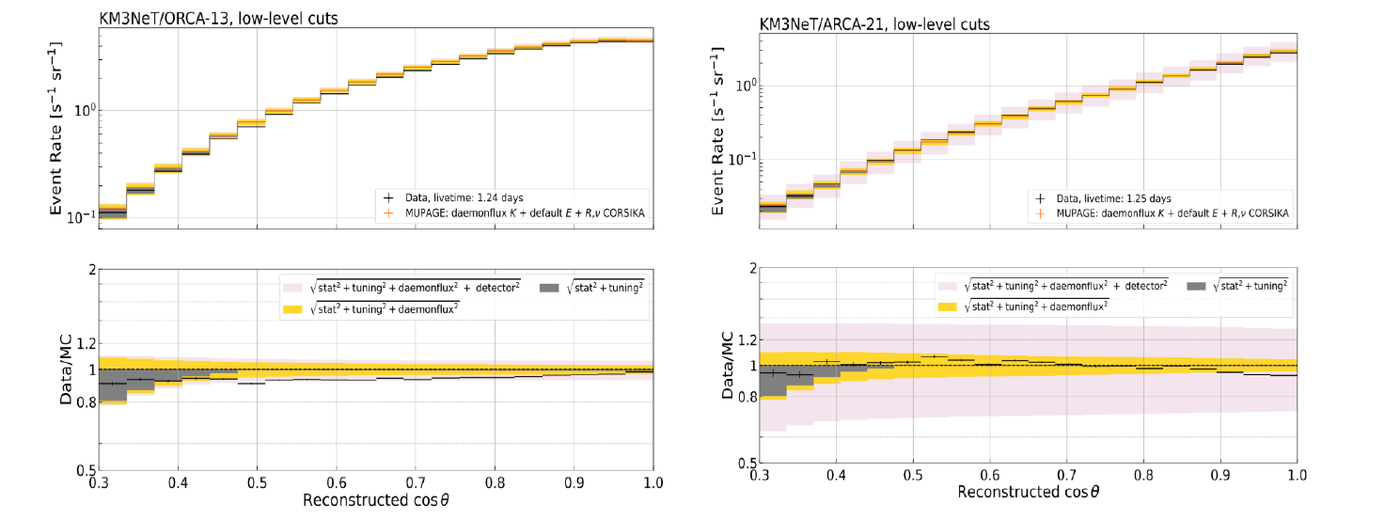
The Cosmic Ray Working Group focused primarily on improving the modelling of atmospheric muon simulations. As a result, the MUPAGE code has been updated with new parametrisations derived from detailed Monte Carlo studies based on daemonflux. This has brought the data/Monte Carlo ratio closer to unity and significantly reduced the systematic uncertainties associated with the estimation of the atmospheric muon background.
Current efforts include also indirect searches for dark matter—such as WIMP annihilation in the Galactic Centre and the Sun using ORCA18 and ARCA21—and a broad exotic physics program probing beyond-Standard-Model phenomena. These include di-muon signatures from SM and BSM processes, heavy neutral leptons via double-cascade topologies, neutrino trident production, and the interpretation of high-energy events (e.g. KM3-230213A) in scenarios involving heavy dark matter decay or primordial black hole evaporation, as well as muon and neutron echo techniques for astrophysical flavour discrimination
The KM3NeT Collaboration is on track toward the completion of both detectors. For ORCA, funding is largely secured, with the remaining contributions expected through annual institutional budgets. The integration of the planned 108 detection units is expected to be completed in 2029, with final deployment in the sea by 2030. For ARCA, funding is already secured for more than 150 detection units and for most of the seafloor infrastructure, while efforts continue to secure the remaining resources in the coming years. The completion of the first building block is targeted for 2029, with the second expected in 2031. The ARCA site will ultimately host 198 detection units in total, maximising the capacity of the seafloor infrastructure.
IceCube
(submitted by Erin O’Sullivan)
The IceCube Collaboration is currently in a period of major transition, with the detector simultaneously operating as usual and commissioning significant new instrumentation in the newly installed IceCube Upgrade. The collaboration has continued to publish analyses in neutrino astrophysics, multimessenger astronomy, oscillation physics, and detector R&D, while preparing for the future expansion, IceCube-Gen2.
The most significant recent development since the last MANTS meeting has been the deployment of the IceCube Upgrade from Nov 2025-Feb 2026. The Upgrade adds approximately 600 new optical modules together with a broad suite of calibration devices embedded in the central region of the detector. The deployed instrumentation includes several new optical module designs for IceCube, including multi-PMT mDOM modules and dual-PMT DEggs, as well as precision calibration devices intended to improve understanding of ice properties and detector systematics. The Upgrade is designed both to enhance the low-energy capabilities of IceCube and better understand the ice, and to test technologies for IceCube-Gen2 in situ.
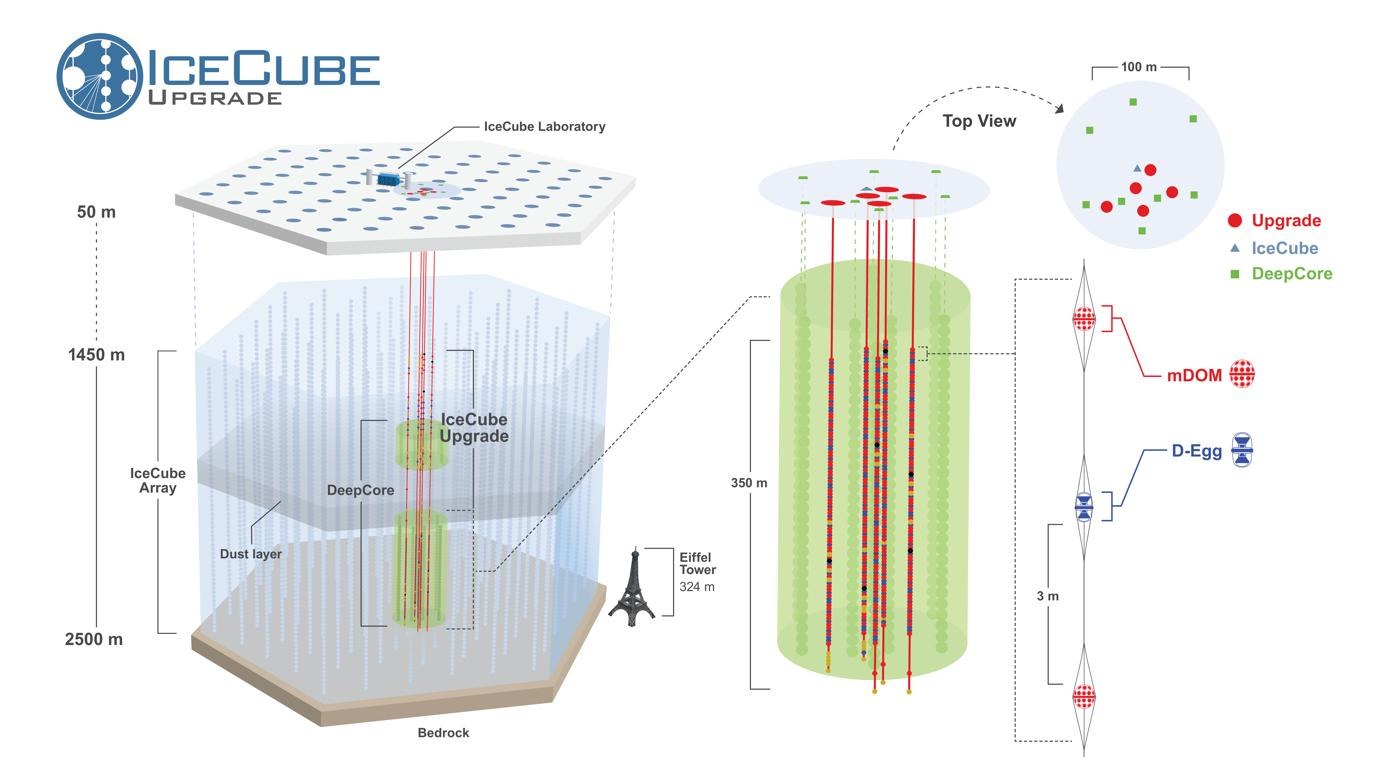
Commissioning of the Upgrade is currently ongoing. Six strings were deployed and five are operational following the loss of communication with one string several weeks after deployment. Investigations into the precise impact on detector performance remain ongoing, but the expectation is that the overall impact on the central Upgrade physics program will be modest and can be overcome with increased running time. The last string is almost fully frozen and we have commissioned 90% of the modules on the active strings.
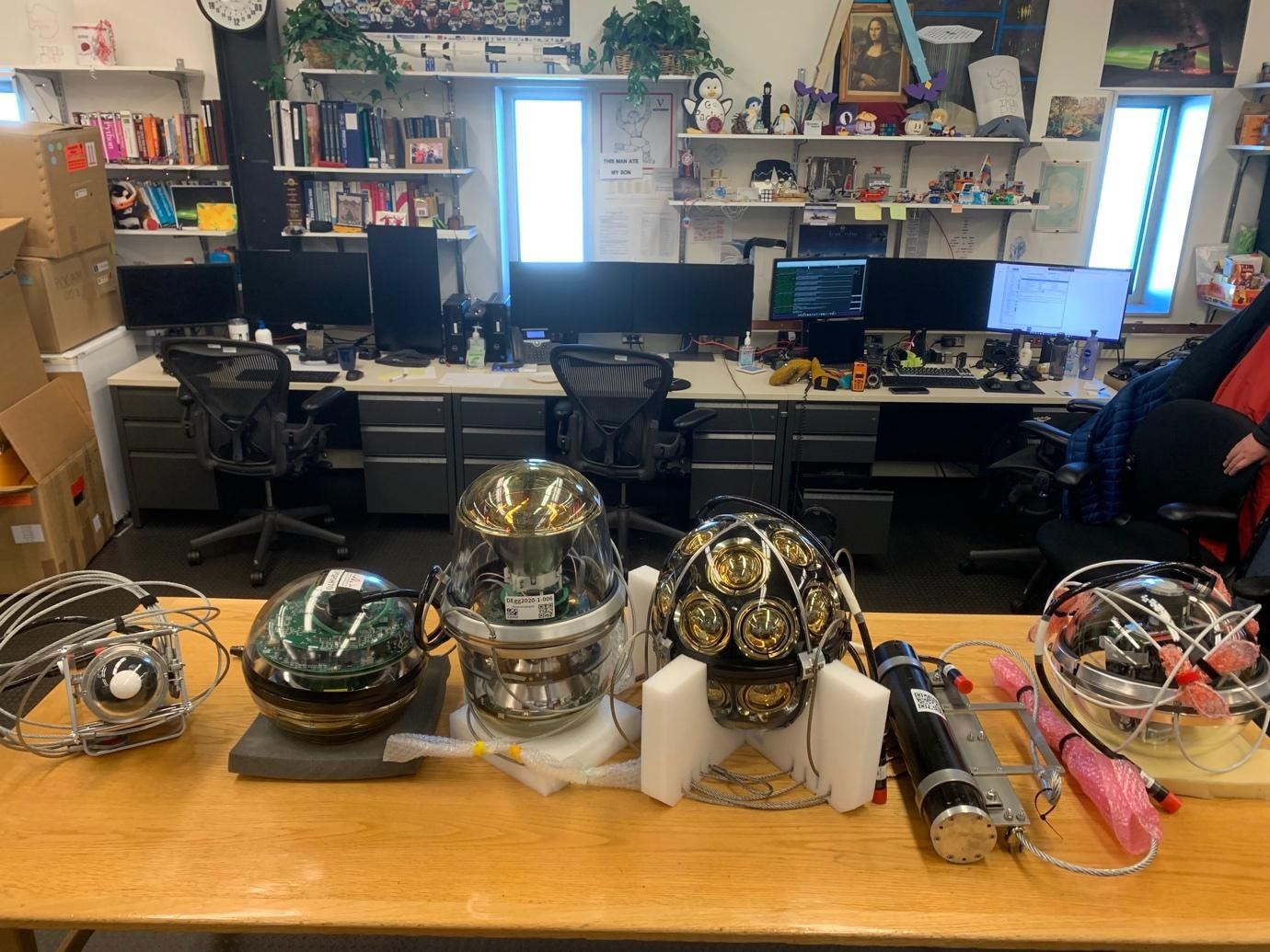
A major focus of current work is detector calibration and integration of the Upgrade instrumentation into the standard IceCube processing chain. We have been viewing the ice with both fixed-focus and steerable cameras, during the deployment and the freeze in. This is helping us to better understand the visual properties of the deep ice and the dynamics of the system as it freezes. We are already analyzing from the LOM-logger, a calibration device used in deployment to characterize the stratigraphy of the ice.
On the physics side, the collaboration is continuing with our research program and published 18 papers in 2025. Highlights of recent or upcoming papers include improved measurements of the Galactic plane, an updated analysis on our highest energy neutrinos, characterization of the spectral shape and flavour composition of the diffuse flux, further evidence for neutrino emission from the direction of Seyfert galaxies, neutrino tomography of the Earth, and analyses that fully utilize the bredth of the detector data, either by combining samples from different energies or topologies.
IceCube continues to issue neutrino alerts to the astronomical community, enabling follow-up observations across the electromagnetic spectrum and with gravitational-wave detectors. Significant effort was devoted to improving the reported angular resolution of alerts. We moved from classic GCN to GCN over Kafka and our GCN schema is now based on a common core format with KM3NeT. In addition to sending parameterized errors, we distribute the HEALPix probability maps, allowing the community more flexibility determining directional uncertainties.
The collaboration remains highly active in cooperative analyses with other experiments and observatories. IceCube maintains strong connections with electromagnetic, gravatational wave and other neutrino observatories through formal MOUs and by distributing our data in real time for follow up. Our updated 14-year data release will be published imminently, which will enable more community engagement with our data.
Planning for IceCube-Gen2 continues in parallel with Upgrade commissioning. Current efforts are focused on finalizing the design of key components. The Upgrade is expected to play a critical role in determining the final design and validating technologies needed for IceCube-Gen2.
Impressum
GNN Monthly is the Monthly Newsletter of the Global Neutrino Network
https://www.globalneutrinonetwork.org
Editor: Christian Spiering, for the GNN Board
christian.spiering@desy.de